Premium Coach Huub
Why Your Webinar Offer Isn’t Working and What to Do Instead
Introduction
Are you pouring hours into creating webinars, delivering valuable content, and still seeing disappointing results when it comes to sales?
You’re not alone.
Many webinar hosts(Coaches, Trainers and Consultants) share this frustration.
But here’s the kicker—what if the problem isn’t your webinar content?
What if it’s your offer?
Even the most engaging webinar won’t convert attendees if the offer doesn’t resonate.
The truth is, that an unclear, uninspiring, or poorly positioned offer can turn an otherwise successful event into a wasted opportunity.
This leads to low sales, disengaged audiences, and countless hours of effort down the drain.
The good news?
You can fix it.
In this blog, we’ll uncover the 5 key reasons why your webinar offer isn’t working and, more importantly, show you exactly how to turn things around.
From crafting crystal-clear offers to creating urgency and building trust, you’ll learn actionable strategies to convert more viewers into paying clients.
Stick around until the end to download our FREE ‘Irresistible Webinar Offer Creation Checklist’ and start creating offers that truly sell!
Ready to transform your webinar results?
Let’s dive in.
Is Your Webinar Offer Irresistible Enough to Convert Viewers into Paying Clients?
Reason 1: Your Offer Lacks Clarity

Problem: Confused audiences don’t buy. If your offer lacks clarity or is too complicated, potential customers won’t fully understand how it will benefit them. They may feel uncertain about whether the offer is relevant to them or how it will help them achieve their goals.
Why It Matters: A confused mind always says no. People need to understand, in simple terms, what they will get from your offer and how it will solve their problems or improve their situation. If the value isn’t immediately clear, they will avoid committing. The clearer and more concise your messaging, the easier it will be for prospects to make a decision.
What to Do Instead: Simplify your offer using the “One Big Promise” formula. Focus on one clear, tangible result that your audience can expect. This approach eliminates any ambiguity about what they will gain.
For example, instead of saying “Learn various sales techniques,” say, “Learn how to close 5 high-ticket clients in 30 days—even if you’re just starting out.” This gives a concrete outcome that is easy for your audience to grasp, ensuring they know exactly what they can expect. Keeping your messaging simple and focused increases the chances of a conversion.
Reason 2: You’re Focused On Features, Not Benefits
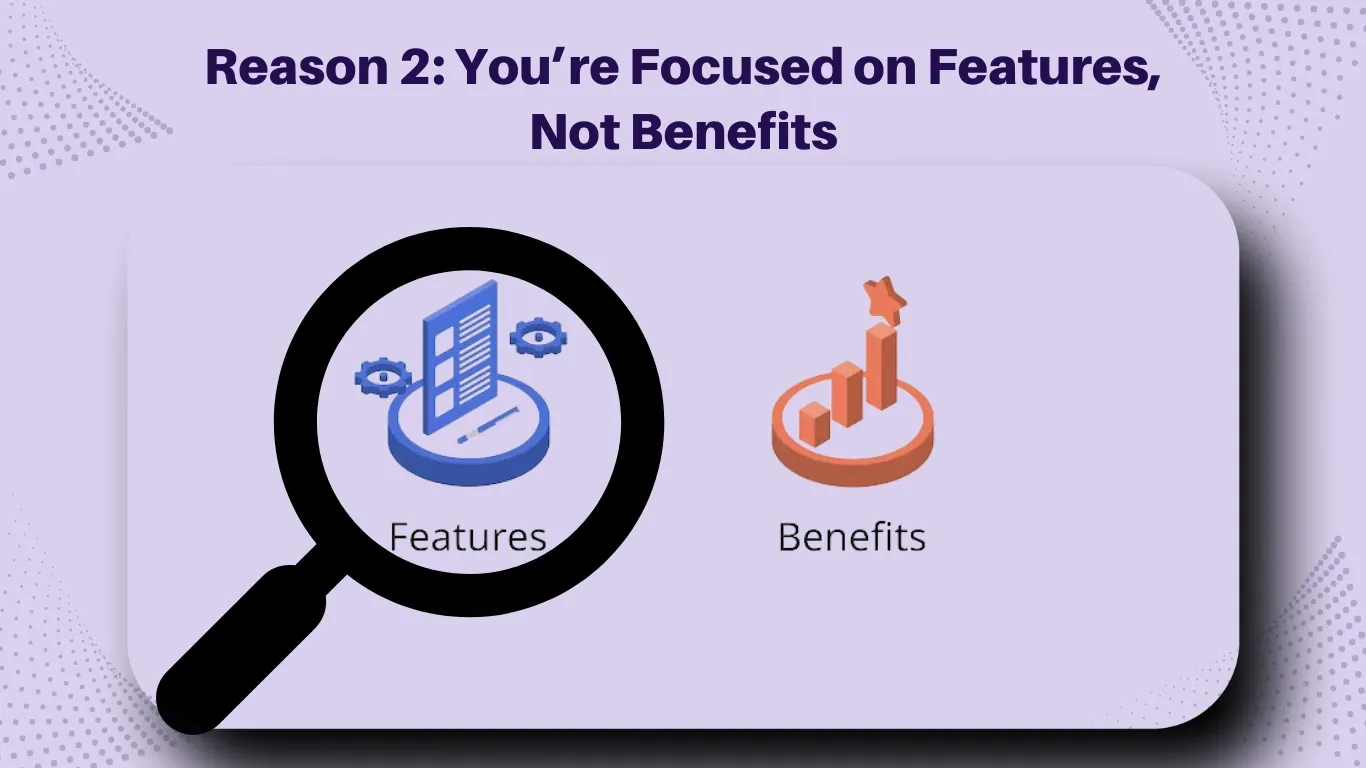
Problem: Features like worksheets, checklists, or templates are helpful tools, but they don’t tell the customer how they’ll improve their situation. Listing these features alone won’t make the sale because they don’t directly address your audience’s pain points or desires.
Why It Matters: People buy solutions to problems, not tools or processes. The features you mention may sound useful, but your audience is focused on how those features will change their lives, solve their issues, or make things easier. If you only talk about the product’s attributes, you miss the emotional and practical benefits they’re looking for.
What to Do Instead: Focus on the benefits and transformations that come from using your offer. Help your potential buyers visualize how their lives will change after they use your product or service.
Instead of saying, “You’ll get 10 sales scripts,” say something like, “You’ll confidently close high-ticket clients without sounding pushy.” This focuses on the result (closing clients) and eliminates concerns (not being pushy), making it easier for the buyer to connect with the offer and see its value. Show them the transformation they will experience.
Is Your Webinar Offer Irresistible Enough to Convert Viewers into Paying Clients?
Reason 3: No Sense Of Urgency
Problem: If people don’t feel a sense of urgency, they often delay making a decision. Without deadlines, discounts, or the fear of missing out, your audience may procrastinate, thinking they can always come back to the offer later.
Why It Matters: When there is no urgency, there’s no immediate reason for your potential customers to act. They may intend to purchase but get distracted or forget about your offer altogether. Creating a sense of urgency helps prompt quicker decisions and ensures that prospects don’t waste time thinking it over. Without a strong reason to act now, many will delay until it’s too late.
What to Do Instead: Introduce time-sensitive offers, limited-time bonuses, or special discounts to create urgency. Let potential customers know that if they act now, they’ll get something extra or save money.
For example, “Sign up within 24 hours and get my Exclusive Sales Script Template FREE!” or “Limited spots available—reserve yours now!” This not only encourages immediate action but also reduces the chance of them forgetting or deciding to delay indefinitely. Scarcity and urgency go hand-in-hand in driving conversions.
Reason 4: Lack Of Social Proof
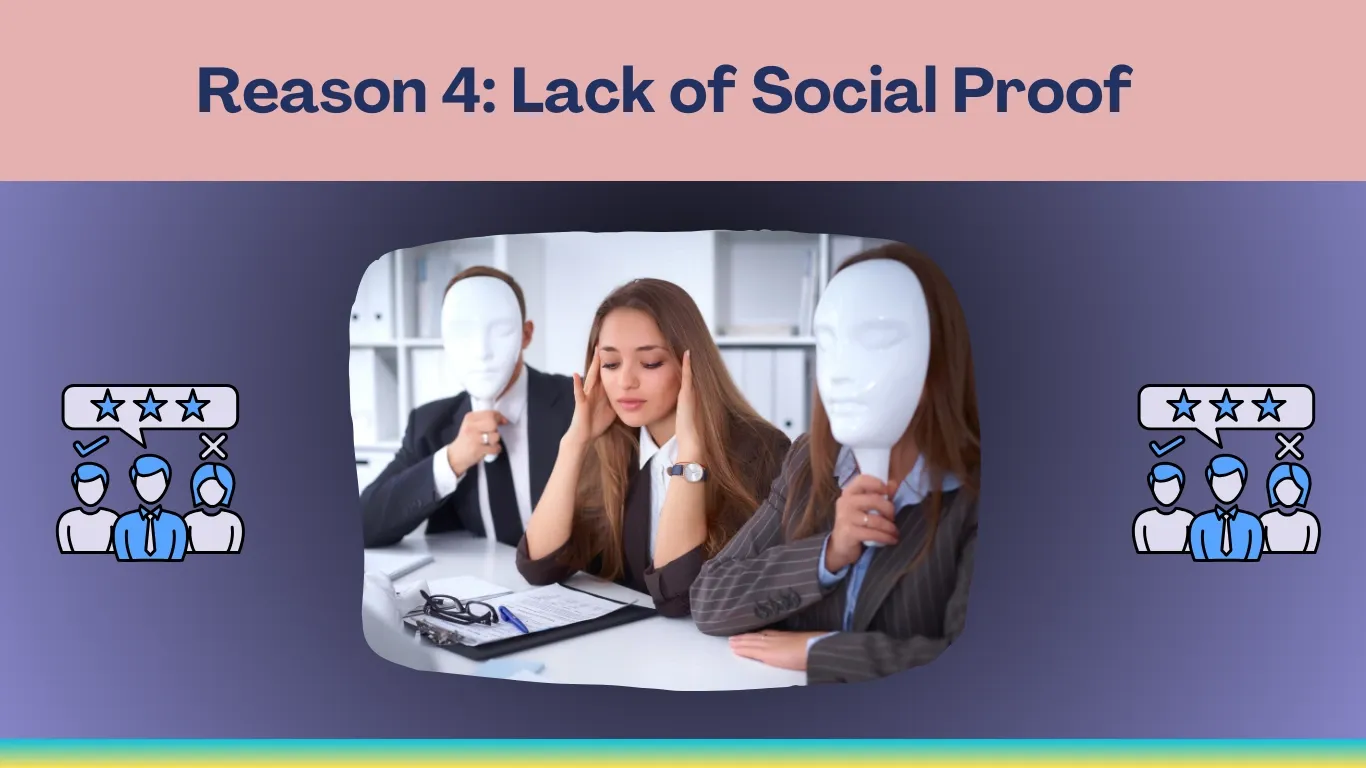
Problem: Potential customers may not trust you if they don’t see evidence that others have achieved success with your offer. Without social proof, they may feel unsure or doubtful about whether your product or service really works.
Why It Matters: Trust is a fundamental part of any purchase decision. Social proof, such as testimonials, case studies, or success stories, acts as third-party validation that your offer is legitimate and effective. People are more likely to buy when they see that others have already benefited from your product or service. Social proof reassures them that they’re making the right decision and that your offer works.
What to Do Instead: Use testimonials, case studies, screenshots, and real-life examples of your past clients' successes. Show them that others, just like them, have used your offer and achieved great results.
Live chat shout-outs like, “Sarah just enrolled! Congratulations!” create a sense of urgency and FOMO (fear of missing out). Seeing others join in real time builds trust and encourages prospective customers to take action. The more social proof you can provide, the stronger your credibility becomes.
Reason 5: Poor Pricing And Payment Options
Problem: If your pricing is unclear, too high, or doesn’t reflect the value you’re offering, potential buyers may walk away. They might feel that the offer isn’t worth the investment or that they can’t afford it. Without flexible pricing or transparent options, you risk losing customers who would otherwise be interested.
Why It Matters: Pricing needs to feel like a no-brainer. Your audience needs to feel that the cost is justified by the value they will receive. A clear pricing structure and the ability to offer payment flexibility ensures that your potential customers don’t feel overwhelmed by the cost or unable to move forward with their purchase. If they don’t feel comfortable with the price or the payment options, they’re less likely to convert.
What to Do Instead: Highlight the value of your offer by showcasing the benefits that far outweigh the cost. Help them see that the transformation they’ll get is worth far more than what they’ll spend. Additionally, offer flexible payment plans or discounts for immediate action.
For example: “Get started today for just ₹2,999—easy payment plans available!” This lowers the barrier to entry and makes it easier for potential buyers to move forward. Show them that the value is far greater than the cost, and they’ll feel more confident about investing.
Is Your Webinar Offer Irresistible Enough to Convert Viewers into Paying Clients?
Bonus Tip: Offer A Strong Call-To-Action
Problem: Weak or unclear calls to action (CTAs) leave attendees unsure about what to do next. If they don’t know what to click or where to go, they might leave without taking any action.
What to Do Instead: Use direct, action-oriented CTAs that tell your audience exactly what to do next.
Be clear and confident in your instructions, such as: “Click the button below to enrol and claim your bonus!” Adding urgency and scarcity can further encourage immediate action: “Offer ends in 24 hours!” Make it easy for them to act now instead of waiting.
Conclusion
Your webinar has the potential to be a powerful sales-generating machine, but only if your offer resonates with your audience.
Let’s recap the 5 common reasons webinar offers fail: lack of clarity, focusing on features over benefits, no sense of urgency, insufficient social proof, and poorly structured pricing or payment options.
The good news?
Each of these problems has a clear and actionable fix.
By crafting a crystal-clear offer, highlighting transformational benefits, creating urgency, leveraging social proof, and offering pricing that feels like a no-brainer, you can turn hesitant attendees into enthusiastic buyers.
Now it’s your turn.
Take a moment to evaluate your current webinar offer.
Which of these strategies can you apply right now to make it stronger?
Ready to take your webinar offers to the next level?
Download our FREE ‘Irresistible Webinar Offer Creation Checklist’ and start creating offers that convert today!
We’d love to hear from you—which of these fixes will you implement first?
Please share your thoughts in the comments below and let’s start the conversation!
Is Your Webinar Offer Irresistible Enough to Convert Viewers into Paying Clients?
Frequently Asked Questions
Your webinars may lack a clear call to action (CTA) or fail to communicate the value of your offer effectively. Many attendees don’t take the next step because they don’t see how your solution solves their specific problem. To improve conversions, make your CTA benefit-driven, clear, and urgent—for example, offering limited-time discounts or bonuses can create urgency.
Increase attendance by crafting compelling invitations that highlight outcomes over features. Send reminders leading up to the event with valuable content to build anticipation. Offering flexible scheduling, such as live and on-demand options, can also make it easier for people to attend.
Mistakes like monotonous delivery, generic content, and a lack of interaction can lead to disengagement. Use polls, Q&A sessions, and live chats to make the session interactive. Start with a strong hook, such as a bold promise or an engaging story, to capture attention immediately.
Keep your audience engaged by delivering high-value insights that go beyond generic advice. Break the session into smaller segments, use storytelling, and interact frequently. Tease your final CTA or bonus early on to give attendees a reason to stay.
Send personalized follow-up emails to attendees and registrants who missed the event. Include a link to the webinar replay, a summary of the key points, and a clear next step, such as booking a call or signing up for your offer.
The webinar topic is critical. It needs to address a specific problem or desire of your target audience. Research what your audience struggles with or aspires to, and choose a topic that provides actionable solutions or insights.
A reliable webinar platform, good audio and video equipment, and a stable internet connection are must-haves. Test your tech setup in advance to ensure smooth delivery, and have a backup plan for any unexpected glitches.
Personalise your content by tailoring it to your audience's unique challenges and goals. Add social proof, such as testimonials or case studies, to build credibility. Focus on delivering actionable tips rather than generic information.
The choice depends on your goal. Free webinars are great for lead generation and building trust, while paid webinars work well for niche audiences who value premium content. Either way, ensure your content is valuable and aligns with audience expectations.
Analyze metrics like attendance rates, engagement levels, and conversion rates. For example, if many attendees drop off midway, it’s a sign your content or delivery needs improvement. Use these insights to refine your content, pacing, and CTAs for better results.
Is Your Webinar Offer Irresistible Enough to Convert Viewers into Paying Clients?
