Premium Coach Huub
How This Storytelling Strategy Keeps 90% of My Webinar Viewers Hooked till the End
Introduction
Do your webinar attendees start off excited but lose interest halfway through?
You’re not alone. Keeping viewers engaged in a sea of distractions can feel like an impossible task.
But what if the secret to captivating your audience isn’t more slides, more stats, or even better content?
What if it’s how you tell your story?
The truth is, that many webinars fail to keep audiences glued to their screens because they overwhelm with information instead of weaving a compelling narrative.
Facts and figures are important, but without a story, even the most valuable insights can fall flat.
A great story doesn’t just inform—it connects, inspires, and moves people to action.
In this blog, we’ll uncover the storytelling techniques that top webinar hosts use to transform their presentations into engaging experiences.
From crafting relatable hero journeys to building moments of anticipation, you’ll learn how to hold your audience’s attention and leave them wanting more.
Don’t forget to grab our FREE ‘Webinar Storytelling Framework’—your ultimate guide to creating stories that keep viewers hooked and drive real results.

Struggling to keep your webinar attendees hooked till the end?
Why Storytelling Matters in Webinars
Webinar attendees today are bombarded with information from every direction—data, slides, charts, and endless bullet points.
Without a captivating story to tie it all together, their attention drifts, and your message gets lost.
Here’s the thing: people don’t remember facts—they remember feelings.
Stories activate emotions, which are essential for holding attention and building a genuine connection.
When you tell a story that resonates, your message becomes memorable and stands out amidst the noise.
So, what’s the solution?
Anchor your webinar content in a narrative that aligns with your audience’s challenges and aspirations.
Show them that you understand their struggles and that there’s a way forward.
For example, kick off your webinar with a transformation story:
“I used to struggle with low webinar attendance and wasted hours preparing content no one acted on. But within three months, I turned it all around, boosting my conversions by 5x.”
This not only grabs attention but also positions you as relatable and credible.
The audience sees themselves in your story and sticks around to discover how they can achieve the same transformation.
Storytelling isn’t just a nice-to-have—it’s your secret weapon for keeping your audience hooked.
Build a Relatable Hero Journey
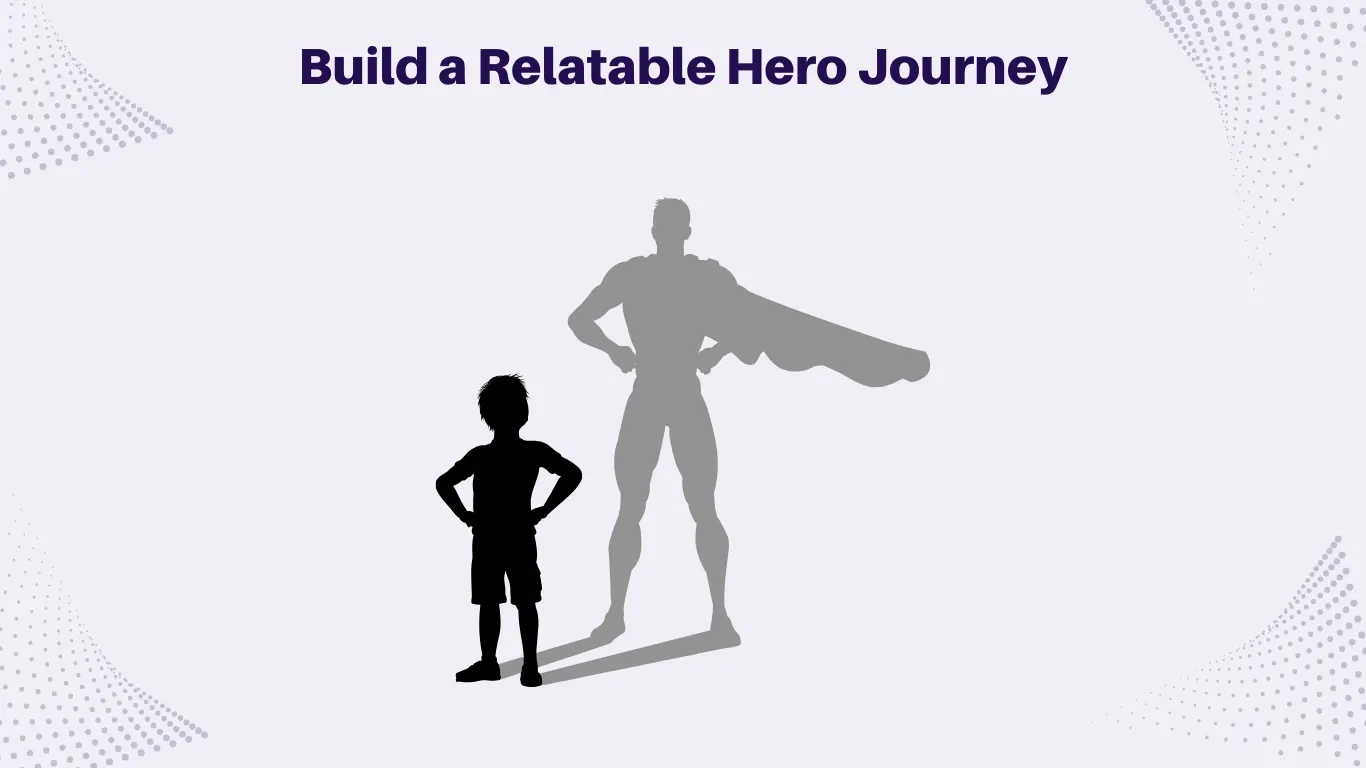
Flat presentations filled with facts and figures often lack an emotional connection, leaving your audience uninspired.
Without that connection, your message can feel distant and unmemorable.
Here’s why this matters: people resonate with stories where they can see themselves in the protagonist’s shoes.
When your audience feels like the “hero” of the story, they become emotionally invested in the journey—and in the solution you’re presenting.
Instead of bombarding viewers with data, structure your webinar around the hero’s journey:
Introduce the hero: Start with someone relatable—yourself or a client—who faces struggles your audience can identify with.
Show the transformation: Highlight how your method, product, or strategy brought about a meaningful change.
Celebrate the victory: Share the results and key lessons that the audience can take away for their own success.
For example: “Meet Priya, a coach who used to struggle with constant no-shows at her webinars. She felt frustrated and unsure of how to fix it. Then she discovered this simple storytelling framework. Fast forward to today—her webinars are fully booked, and her audience stays engaged from start to finish.”
This approach doesn’t just inform—it inspires. Your audience will see what’s possible for them and stay hooked until the very end.
Struggling to keep your webinar attendees hooked till the end?
Use Conflict and Resolution to Sustain Interest
Webinars that lack tension or stakes often feel flat and monotonous.
Without a sense of conflict, your audience has no reason to stay engaged—they’re just passively consuming information.
Here’s why conflict matters: it creates curiosity and keeps viewers emotionally invested.
When you introduce a challenge, they’ll stick around to see how it gets resolved. It’s this narrative tension that transforms a dry presentation into a compelling experience.
What’s the solution?
Incorporate conflict and resolution into your webinar structure:
Introduce a challenge early on that resonates with your audience’s struggles.
Build suspense as you delve into the problem, showcasing its impact and relevance.
Reveal the resolution gradually, using your content to guide them toward the solution.
For example, start with: “Imagine spending weeks preparing for your webinar—perfect slides, engaging content—only to see attendees drop off 10 minutes in. It’s frustrating, right? This happened to me until I discovered a simple but powerful technique that completely changed the game.”
This approach not only grabs attention but also makes your solution feel earned and valuable.
Your audience will be eager to learn how they, too, can overcome their challenges and achieve success.
Struggling to keep your webinar attendees hooked till the end?
Incorporate Visual and Verbal Storytelling Techniques
Problem: Relying solely on slides or talking points can make your webinar feel one-dimensional, leading to disengagement.
Your audience needs a multi-sensory experience to stay hooked.
Why It Matters: People absorb information in different ways—some are visual learners, while others respond better to verbal communication.
By combining both visual and verbal storytelling techniques, you ensure you reach a wider audience and maintain attention throughout your presentation.
What to Do Instead:
Use visuals like images, infographics, and charts to emphasize key points. Visuals can simplify complex ideas and make the information more memorable.
Incorporate short videos to showcase real-life examples or client transformations. Videos can evoke emotions and make your message more relatable.
Verbal storytelling is equally important. Engage your audience by changing your tone, pace, and pauses to create emotional highs and lows. Emphasize critical points with changes in your voice to stir excitement or highlight seriousness.
Example: While talking about a client's transformation, show a before-and-after image and narrate their journey, using a slower tone when describing the challenges and a more energetic voice when discussing their success. This combination captures both the heart and mind, keeping viewers fully engaged.
Create Moments of Anticipation
Problem: Flat presentations often give everything away too soon, leaving little room for excitement and engagement. When you reveal all your information right away, you risk losing momentum and interest.
Why It Matters: Building anticipation keeps your attendees on the edge of their seats. It sparks curiosity and encourages viewers to stay engaged, eager to see what comes next. By creating moments of suspense, you make your content feel more like an unfolding story rather than just a series of points.
What to Do Instead: Use open loops to tease future content. Create moments where viewers know something important is coming, but hold off on the reveal until the right moment. This technique works like a cliffhanger in a TV show—your audience will stay hooked, waiting to find out what happens next.
For example:
You could say, "In just 5 minutes, I’ll reveal the #1 trick to retain 80% of your viewers until the end," or "Stick around until the end to discover the one mistake that’s killing your webinar conversions."
This sense of curiosity not only keeps the audience tuned in but also builds the value of the content, ensuring they don’t want to miss what’s coming next.
Struggling to keep your webinar attendees hooked till the end?
End with a Powerful Climax
Problem: A weak conclusion can cause viewers to lose their enthusiasm just when they should be taking action.
Why It Matters: A strong climax at the end of your webinar leaves a lasting impact. It’s your final opportunity to drive your message home, inspire action, and motivate your audience to engage further.
What to Do Instead:
Summarize the key takeaways with energy and excitement.
Call to action: Encourage your viewers to take the next step—whether it’s signing up for a course, scheduling a call, or purchasing your product.
Use an emotional hook or impactful statement that resonates with your audience’s desires or challenges. This will help them remember the webinar long after it’s over.
Example: End with something like, “Now that you’ve learned the secret to skyrocketing your webinar conversions, the next step is up to you. Don’t wait—take action now and unlock your full potential!"
This creates a sense of urgency and leaves them motivated to take immediate steps.
Conclulsion
Storytelling is the secret sauce that turns an ordinary webinar into an unforgettable experience.
By weaving relatable journeys, incorporating conflict and resolution, and building anticipation, you can transform even the driest content into a narrative that captivates, inspires, and drives action.
It’s not just about what you say—it’s about how you make your audience feel.
The power of storytelling lies in its ability to create emotional connections and keep viewers engaged from the first slide to the final call to action.
Whether you’re sharing your own transformation, or showcasing client success stories, storytelling has the potential to keep attendees glued to their screens and eager for more.
Ready to transform your webinars into storytelling masterpieces?
Download our FREE ‘Webinar Storytelling Framework’ today and craft narratives that captivate, connect, and convert your audience from start to finish!
What’s one storytelling tactic you’ll try in your next webinar?
Share your thoughts in the comments below—we’d love to hear your ideas!
Struggling to keep your webinar attendees hooked till the end?
Frequently Asked Questions
Storytelling helps capture your audience's emotions, which makes them more invested in your content. When you tell a story, you connect on a human level, which helps viewers relate to your message and stay engaged. Stories also break down complex information into relatable experiences, making it easier for viewers to absorb.
The hero's journey is a storytelling structure where the protagonist goes through a transformation. In webinars, you can use this structure by introducing a relatable "hero" (you or a client), presenting a challenge, showing how your method or product helped overcome the challenge, and then highlighting the success that followed. This structure resonates with audiences and keeps them emotionally invested.
Anticipation is created by teasing upcoming content without giving it all away upfront. For example, hint at a key revelation or tip that will come later in the webinar, such as, “Stick around to learn the #1 strategy that helped me increase webinar conversions by 300%.” This keeps viewers curious and engaged, eager to see what's next.
Conflict and resolution create tension and keep the audience interested in how things will unfold. Present a problem or challenge at the beginning of your webinar and then walk your audience through how it was solved. By structuring your content this way, you make your webinar feel more like a story, with a satisfying resolution at the end.
Yes, visuals play a crucial role in reinforcing your narrative. Images, charts, or videos can help illustrate key points and make them more memorable. Use visuals to support your story, not just as slides with bullet points. A before-and-after transformation image or a simple graph can be much more engaging when paired with a story.
Open loops are moments where you tease an upcoming point but don’t reveal it immediately. This creates curiosity and makes viewers stay tuned for the resolution. For example, saying something like, "In just a few minutes, I’ll share the biggest mistake I made that caused me to lose clients—don’t miss it!" keeps the audience waiting for the payoff.
Emotional storytelling connects with your audience on a personal level. Share struggles, successes, or personal experiences that resonate with their challenges. Use emotions like excitement, frustration, or relief to make your points more compelling. When your audience feels something, they are more likely to stay engaged and take action.
While delivering valuable content is crucial, it’s important to keep it engaging by framing it in a story. Instead of just listing facts or data, narrate your points within a story context. For example, instead of just explaining a strategy, tell a success story about how the strategy worked for someone, making the learning experience more immersive and memorable.
The ending should leave a lasting impression. Summarize the key takeaways in an energetic way, reinforcing the most important message. Then, offer a strong call to action that prompts your viewers to act. Whether it's signing up for your course, downloading a resource, or scheduling a consultation, end with a sense of urgency and motivation.
To make your story relatable, ensure it reflects the challenges and aspirations of your audience. Use language they can relate to, and include experiences or examples that mirror their struggles or goals. For example, if you’re targeting entrepreneurs, share a story about overcoming challenges that small business owners commonly face. This helps build a connection and keeps them engaged.

Struggling to keep your webinar attendees hooked till the end?
